Characteristics
- Launch Date:
- February 12th, 2026
- Spaceport:
- Baikonur
- Launchers:
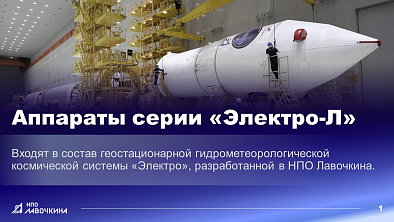
- Proton-M LV + DM-03 upper stage
- Machine Weight:
- 1640 kg
- Working Orbit:
- geostationary (GEO)
- Active Lifetime:
- not less than 10 years
- acquisition and pre-processing (normalization) of multispectral images of cloud cover and underlying terrain within the entire observed Earth disk;
- acquisition of heliophysical data at the orbit altitude;
- data collection and relay from the data collection platforms;
- implementation of telecommunication functions of distribution and exchange of hydrometeorological and heliophysical data;
- relay of signals from the COSPAS-SARSAT emergency radio beacons.
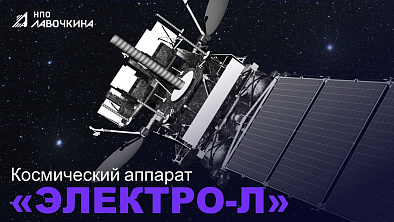
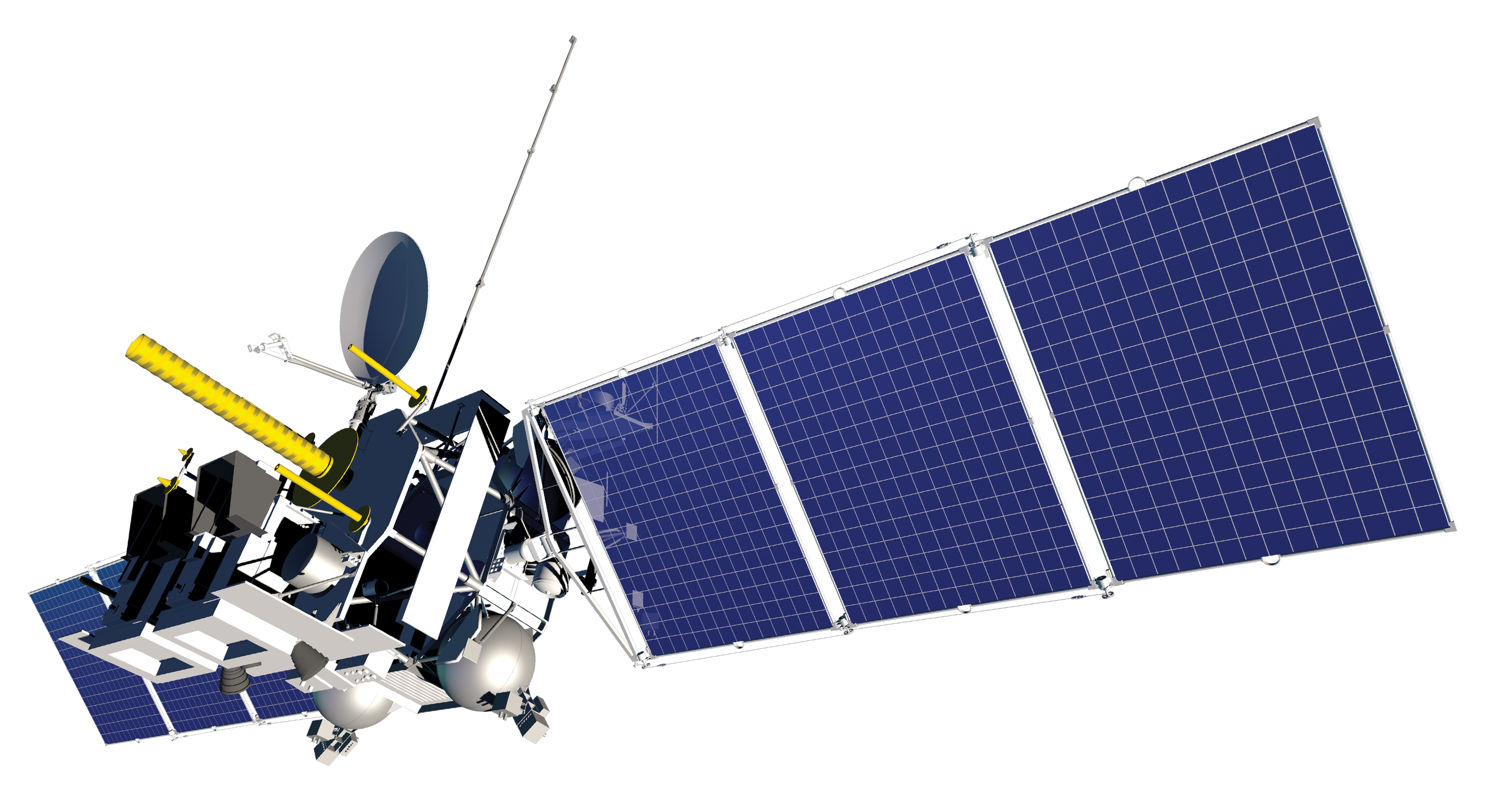
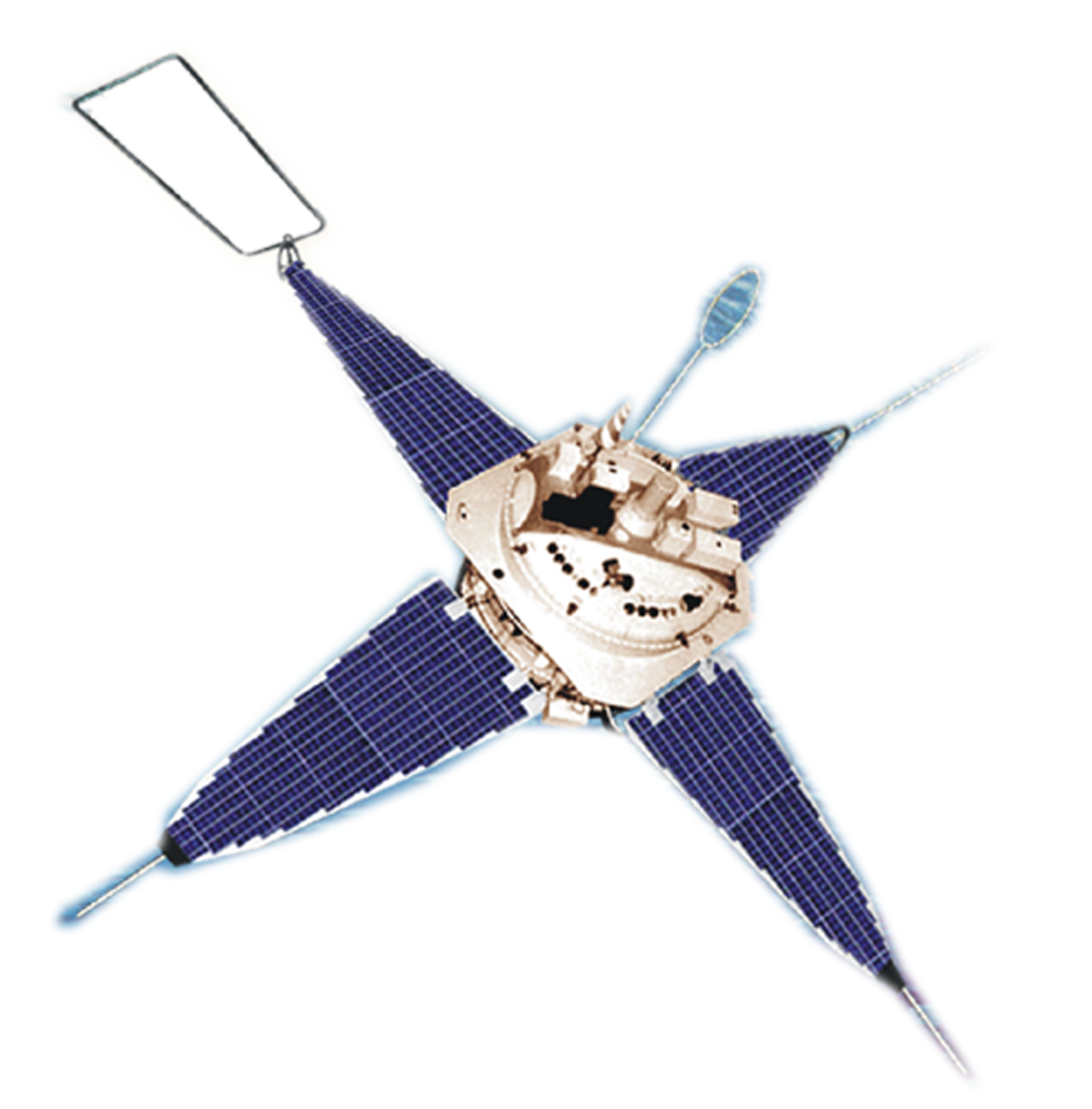
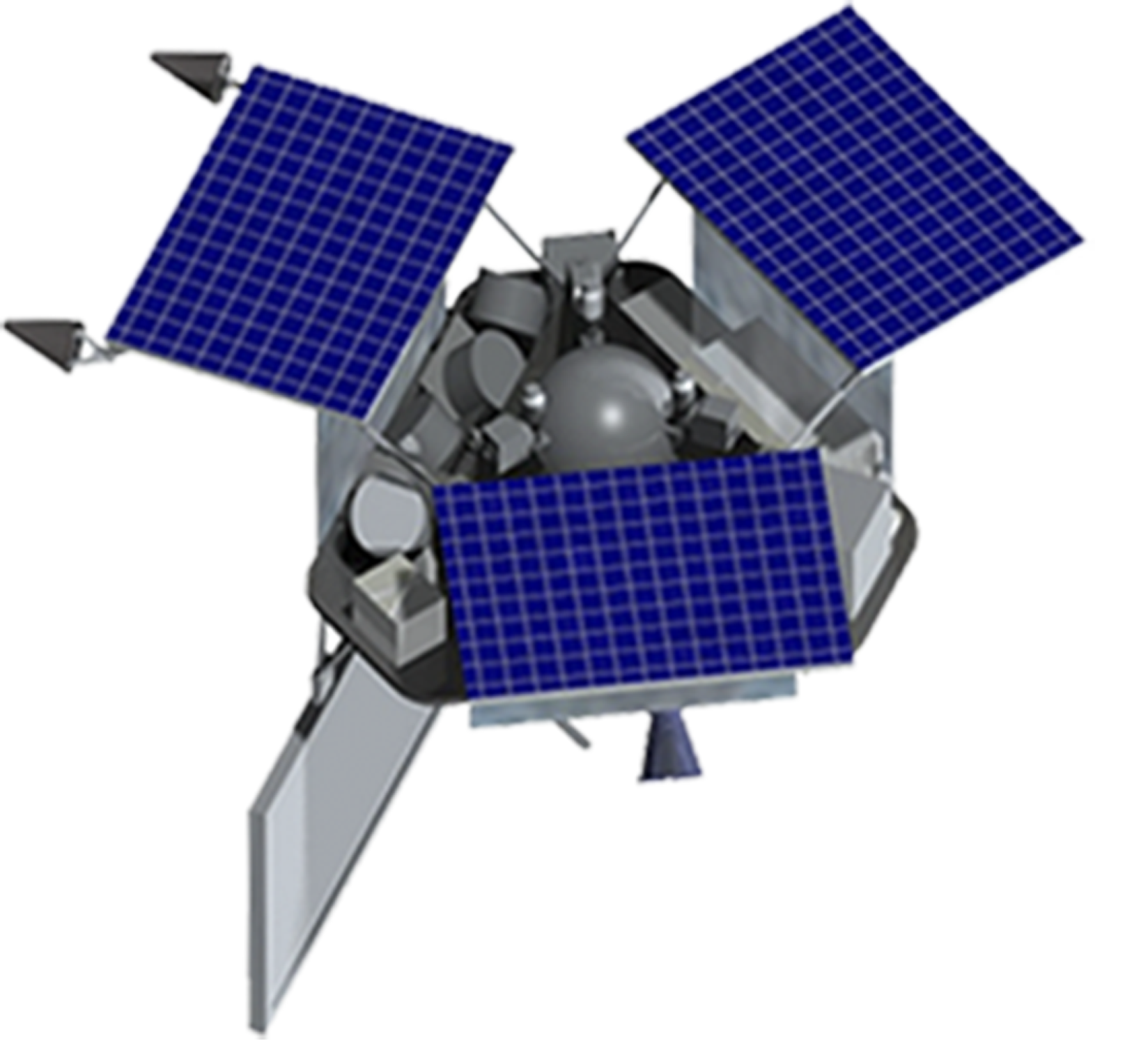
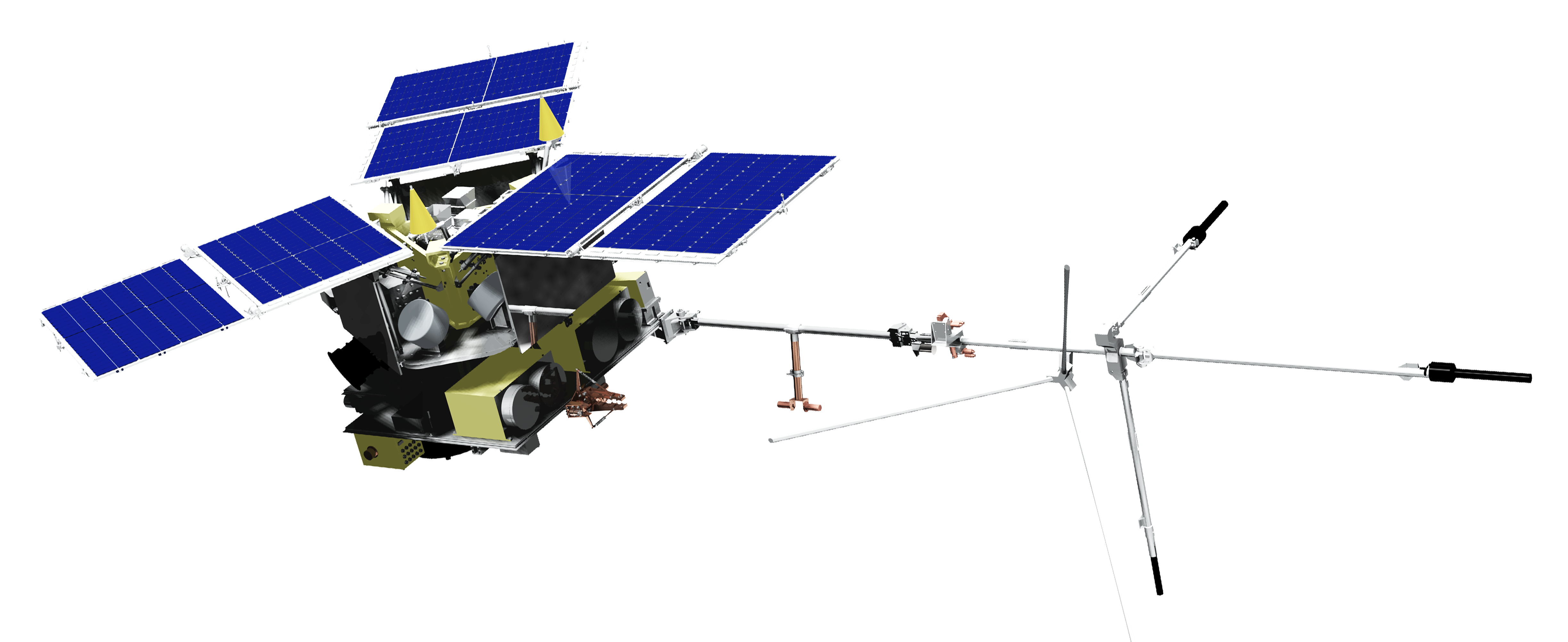
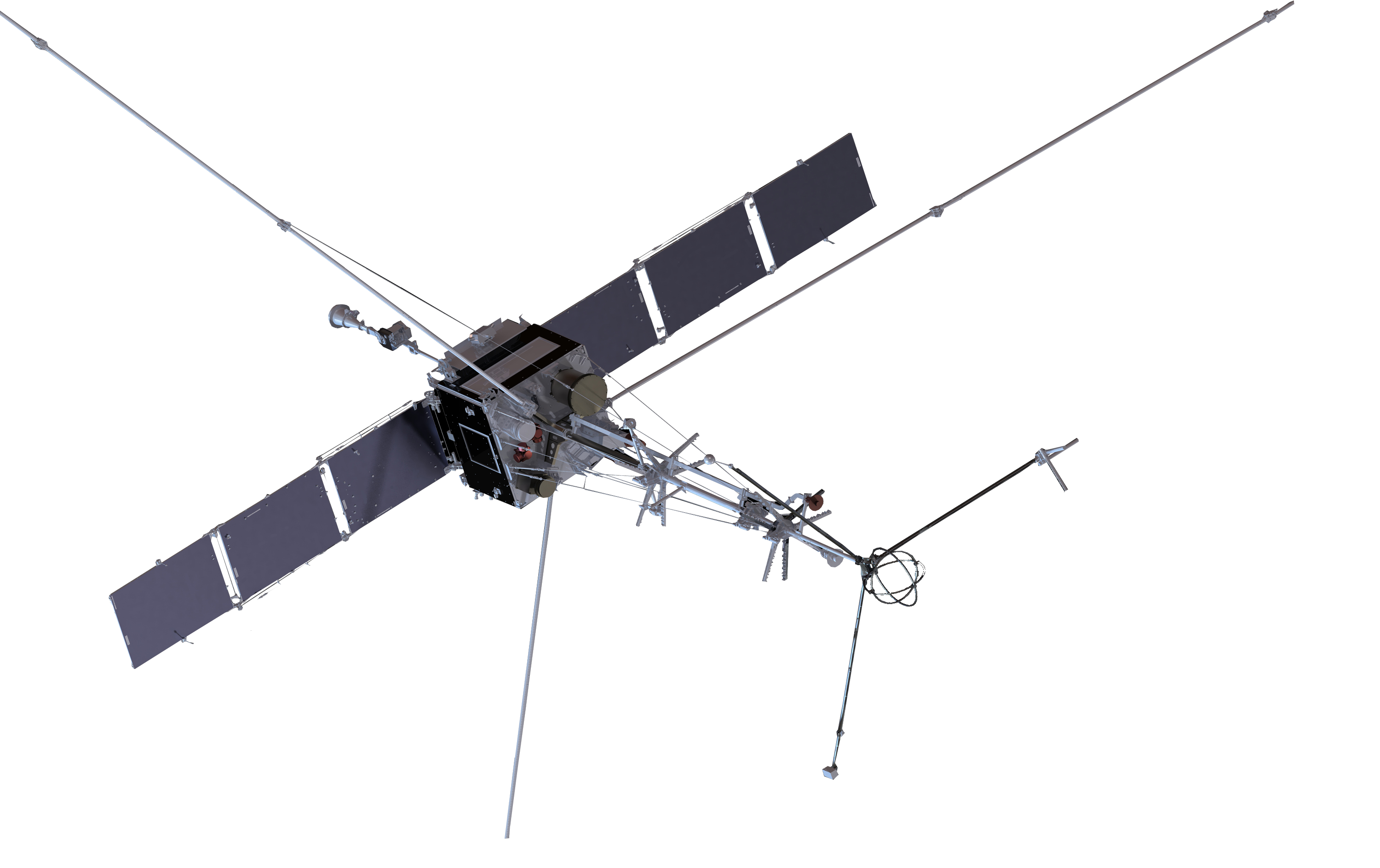
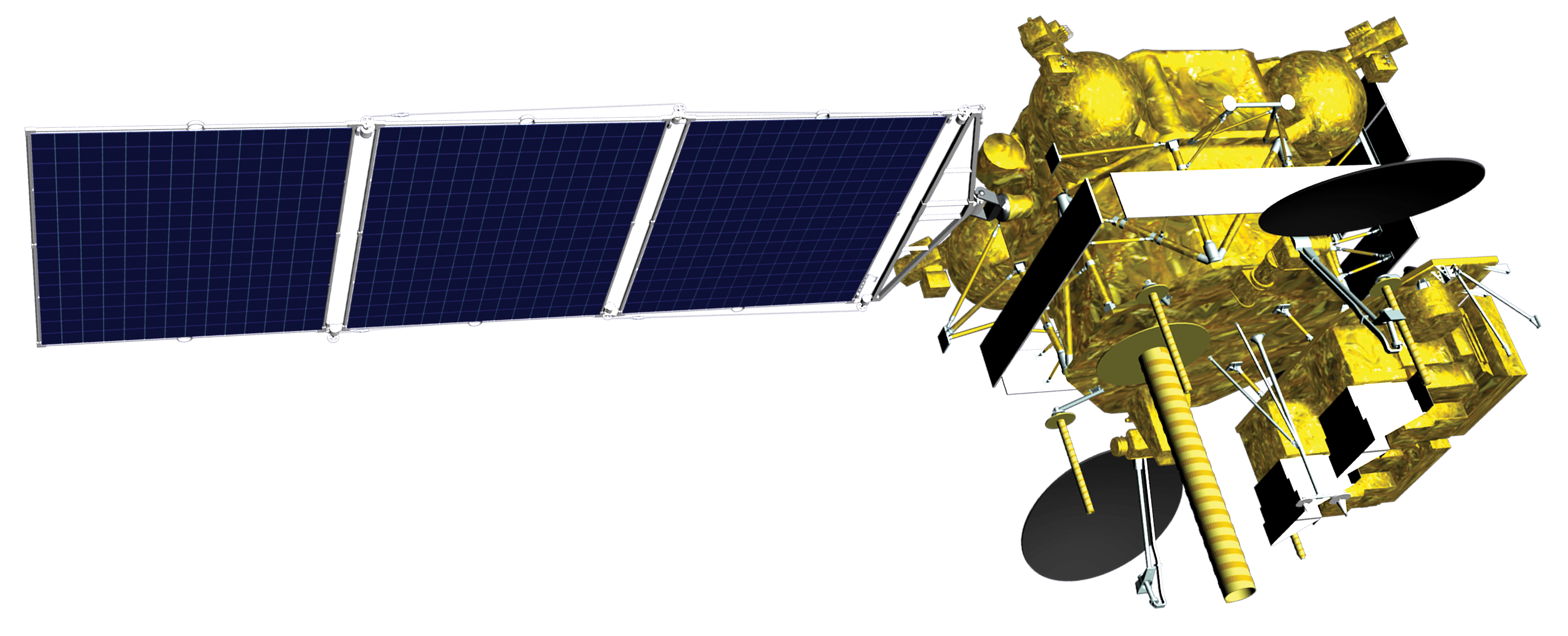
The Electro-L spacecraft family was developed and being manufactured at Lavochkin Association, JSC for the Electro geostationary hydrometeorological space system under the Federal Space Program of Russia.
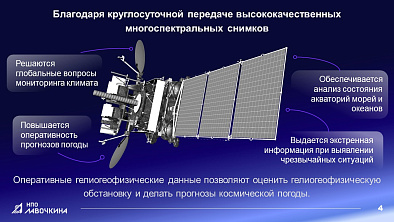
The overall system’s objective is the entire Earth’s disk monitoring and providing self-sufficient meteorological data to the involved governmental agencies of the Russian Federation. Beyond that the Electro-L family spacecraft are applied for the data collection and relay from the Data Collection Platforms, implementation of telecommunication functions in distribution and exchange of hydrometeorological and heliophysical data and relay of signals from the COSPAS-SARSAT emergency radio beacons.
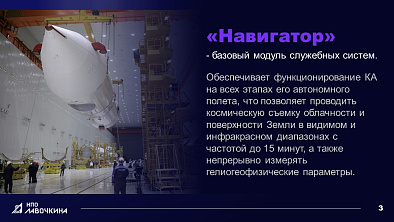
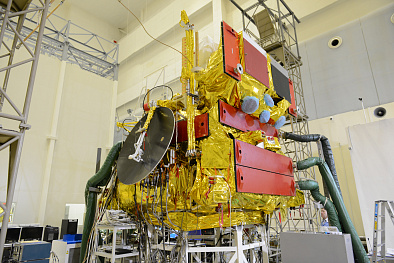
The spacecraft are designed modular based on the multipurpose Navigator space platform developed by Lavochkin Assocition as well. This platform has flight qualification and aimed at being a base for precision-built spacecraft for various purposes (Earth remote sensing, space astronomy).
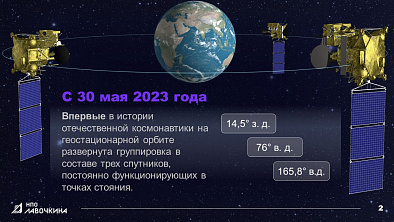
On January 20th, 2026 it has been 15 years since the start of the Electro system operation in the Earth orbit. At present the following four spacecraft of the hydrometeorological system are used as intended: Electro-L#2 (launched on December 11th, 2015) in standpoint of 14.5° W longitude, Electro-L#3 (launched on December 24th, 2019) in standpoint of 76° E longitude, Electro-L#4 (launched on February 5th, 2023) in standpoint of 76° E longitude. On February 12th, 2026 another meteorological satellite Electro-L#5 in standpoint of 76° E longitude reinforced the hydrometeorological SC constellation.
The entire Earth’s disk monitoring and providing self-sufficient meteorological data to the involved governmental agencies of the Russian Federation.